
Bocksbeutel,

The Bocksbeutel is the iconic wine bottle shape attached to the cultural identity of the wines of Franconia (Franken), in Bavaria, Germany. Its rich history, unique design, and continued use by notable producers highlight its cultural and oenological significance.

How did it came about?
The shape's earliest use is tied to monks in the Middle Ages, used for its practicality in preventing bottles from rolling off tables or carts, which seemed to be quite an issue at the time. Historical references to flat wine flasks date back to 1400, making it one of the oldest bottle designs still in use. Some theorize that the shape was also easier to replicate at the manufacturing.
By the 18th century, the Bocksbeutel became closely associated with Franconian wine, symbolizing tradition and excellence. It served as a guarantee of quality for wines grown in Franconian soil. The wines of Franken did particularly well and the shape of the bottle was a great marketing technique for enthusiast to recognize the wines.
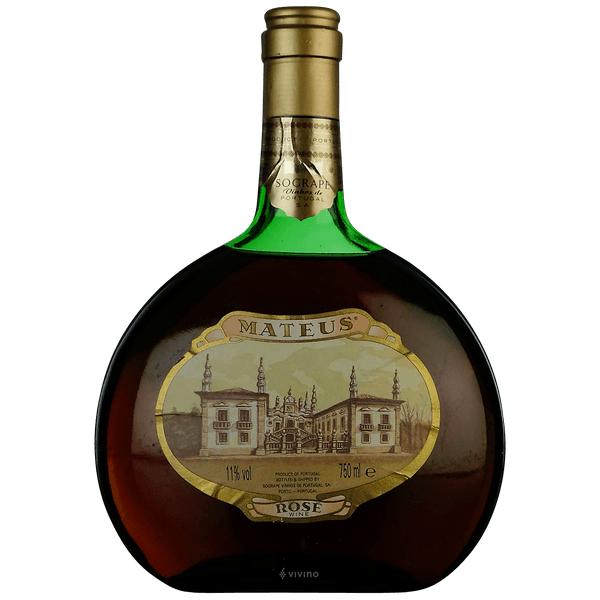
In 1989, the European Union granted the Bocksbeutel legal protection, restricting its use to certain regions and wines of high quality. Outside of Franconia, some parts of Baden and Württemberg in Germany, as well as parts of Portugal got grandfathered. The best example of Non-Franken Bocksbeutel is the norotiously famous Mateus Rose from Sogrape, in Portugal.
Design
Dimensions & materials
Most Bocksbeutel holds 750 mL but can vary for specialty wines, as there has been some producers bottling Magnums or even Jeromboams. Its short neck and wide, flattened spherical body create a surface area that minimizes sediment disturbance, which is ideal for aging certain styles of wine, historically. Nowadays, mainly Sylvaner finds itself bottled as such and sediment isn’t much an issue nor aging.
Traditionally made of green or brown glass to protect wine from light damage.
Producers Using the Bocksbeutel
Franconian wineries are the primary users of the Bocksbeutel. Here are some notable examples:
Weingut Juliusspital (Würzburg):
One of Franconia’s oldest and largest wineries, known for its premium Silvaner and Riesling wines presented in Bocksbeutel bottles.
The flagship winery of the region, notable holders of Iphöfer Julius-Echter-Berg vineyard, a must for anyone looking to experience exceptional wines made of Sylvaner.
Weingut Bürgerspital zum Hl. Geist (Würzburg):
Famous for producing wines in traditional styles, including Scheurebe and Müller-Thurgau, using Bocksbeutel bottles to emphasize their historical roots.
Significant holdings in Würzburger Stein, another Grosses Gewachs worth trying.
Weingut Hans Wirsching (Iphofen):
Known for high-quality Silvaner wines, often featured in sleek, modern Bocksbeutel bottles. Potentially the most common Franken producer avaialable in North America.
Another owner of Iphöfer Julius-Echter-Berg vineyard, with significant Riesling planting there.
Weingut Castell-Castell (Castell):
A pioneer in Silvaner cultivation, with their premium wines housed in the Bocksbeutel.
A larger producer in matter of volume but a great example of the wines of the region.
Bodega Mateus Rosé (Portugal):
Outside of Germany, Portugal uses a similar flask-like bottle shape for certain wines, such as Mateus Rosé, reflecting the shape's adaptability.
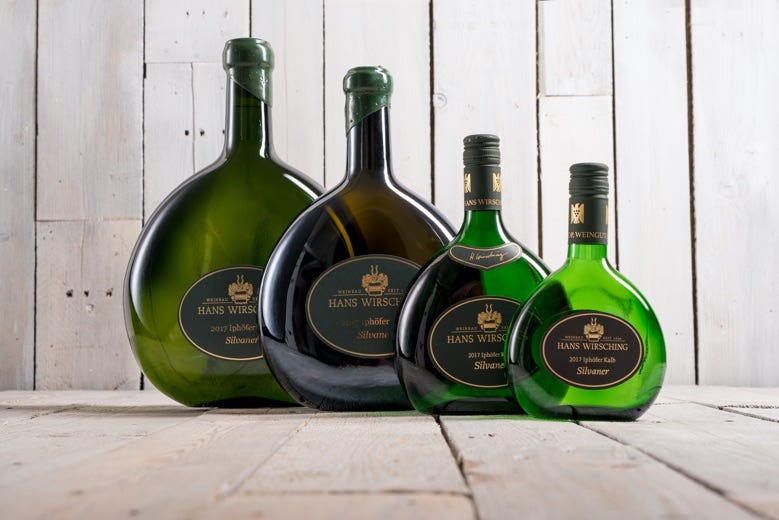
Weingut Hans Wirsching bocksbeutel in various sizes.
Stats
Franconian Focus:
85% of all Bocksbeutel bottles are used in the Franconia region.
As of recent years, 50% of Franconia’s vineyards (around 6,000 hectares) produce wines bottled in Bocksbeutels.
The Franconian wine industry annually produces approximately 40 million liters.